New Developments in Metal Bond Diamond Grinding Wheel Manufacturing
Tool life and machining efficiency are the two key performance indicators for metal bond diamond grinding wheels. The bonding strength between the metal matrix and diamond abrasives is the critical factor affecting tool life, while the difficulty of dressing and truing these wheels is a major obstacle to improving machining efficiency.
This article reviews the latest advances in enhancing the bond strength of metal matrix diamond abrasives and improving wheel dressing capabilities, introduces the application of high-temperature brazing technology and wheel topography optimization, and proposes a new generation of metal bond superabrasive tools based on brazing technology as the core manufacturing process.
1. Enhancing Bond Strength Between Matrix and Abrasives
In traditional metal bond diamond sintered wheel manufacturing, two main approaches are used to enhance bond strength:
- Direct addition — Adding active elements such as Ti (TiH₂), Cr, or rare earth elements to the sintering raw materials
- Surface metallization — Coating diamond abrasives with active metals (Ti, Cr) or their alloys, which react with diamond and the metal bond during high-temperature sintering to form a chemical-metallurgical bond
Research has consistently shown that these measures significantly improve the bond strength between the metal matrix and diamond abrasives. Microscopic analysis reveals that active elements concentrate in the vicinity of diamond grains, forming carbide transition layers that bridge the diamond and the metal bond.
2. Improving Wheel Dressing and Truing
Metal bond diamond sintered wheels are typically dense structures, making them difficult to dress and true after initial use and wear. Compared to ELID (Electrolytic In-Process Dressing) and laser dressing technologies, improving the wheel’s own dressability offers a more efficient solution.
Porous metal bond diamond wheels — Developed by Japanese researchers (T. Tanaka, H. Tomino, S.H. Truong), these wheels introduce a porous structure similar to ceramic bond wheels, providing easier dressing, better chip clearance, and improved self-sharpening characteristics. Optimal porosity is around 25%, which maximizes grinding ratio while reducing specific grinding energy.
3. High-Temperature Brazing Technology
High-temperature brazed single-layer diamond wheels fundamentally improve the bond strength between abrasives and the metal matrix. Using active Ni-Cr or Ag-Cu alloys with added Cr powder, a chemical-metallurgical bond is formed between diamond and the braze material.
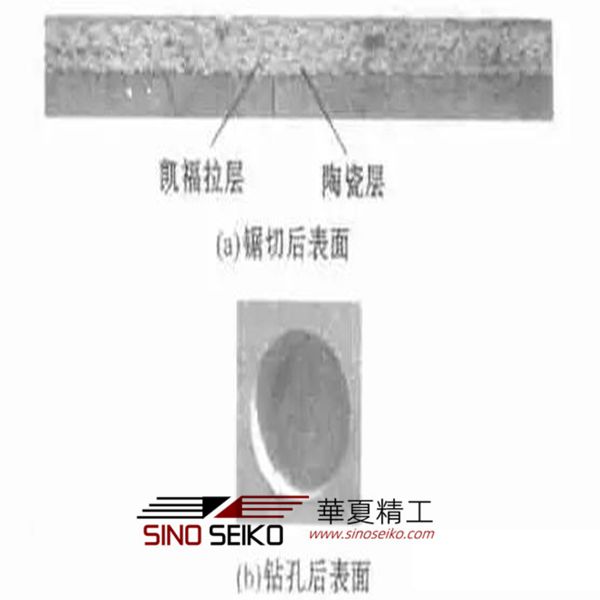
Research shows that the interfacial bond strength is so high that maintaining a bond layer thickness of only 20–30% of the abrasive grain height is sufficient to securely hold grains during high-speed, heavy-load grinding. These wheels have demonstrated excellent performance in cutting and drilling armor composite plates, producing smooth surfaces without chipping or edge defects.
4. Wheel Surface Topography Optimization
A new approach to wheel design involves arranging abrasive grains in an ordered pattern rather than random distribution. By optimizing grain spacing based on machining requirements and grinding parameters, the wheel’s performance can be significantly improved.
In granite cutting tests, wheels with optimized grain arrangement showed:
- 120% longer life compared to non-optimized brazed wheels
- 87% of the life of multi-layer sintered wheels
- 115x higher machining efficiency than brazed wheels
- 419x higher efficiency than sintered wheels
5. Future Directions for Next-Generation Products
The next generation of metal bond diamond grinding wheels should combine three key technologies:
- High-temperature brazing — for optimal bond strength
- Porous structure — for improved dressing and chip clearance
- Optimized grain arrangement — for best cutting load distribution and predictable grinding results
By integrating these technologies, next-generation wheels will achieve: full utilization of diamond abrasive potential without grain shedding under heavy loads, high sharpness with large chip clearance, and optimized cutting load on every grain for predictable machining parameters and results.
SINOSEIKO (or SSK Diamond) provides diamond grinding wheels and superabrasive tools for demanding industrial applications. Contact us for technical consultation.